The Cybersecurity Maturity Model Certification (CMMC) was formally made part of the Defense Federal Acquisition Regulation Supplement (DFARS) in January 2020 and updated to CMMC 2.0 in November 2021. The decision affected more than 300,000 defense industrial base (DIB) members, and many found themselves drowning in all kinds of unnecessary noise surrounding CMMC and its implications on existing and future government contracts.
Appalachia Technologies Blog
While artificial intelligence (AI) has many benefits for businesses, it has also created new vulnerabilities that cybercriminals can exploit to carry out complex cyberattacks that are difficult to detect and mitigate. Using AI, hackers can create convincing phishing emails that bypass spam filters. Similarly, cybercriminals can leverage AI to manipulate security systems and gain unauthorized access that causes irreparable damage to your business and your reputation.
In today’s digital age, ransomware attacks are becoming increasingly frequent, sophisticated and costly. With cybercriminals constantly evolving their tactics and targeting businesses of all sizes, organizations like yours must proactively safeguard your data and systems. Unfortunately, many companies fall prey to common ransomware myths, which can leave them vulnerable to attacks and unprepared to respond effectively in the event of an incident.
Mike Miller was invited to speak at SecureWorld Charlotte in a fireside chat titled, "Your Career in Cybersecurity" in early March. Mike is sharing his experience - tag along as he gives his first-hand account!
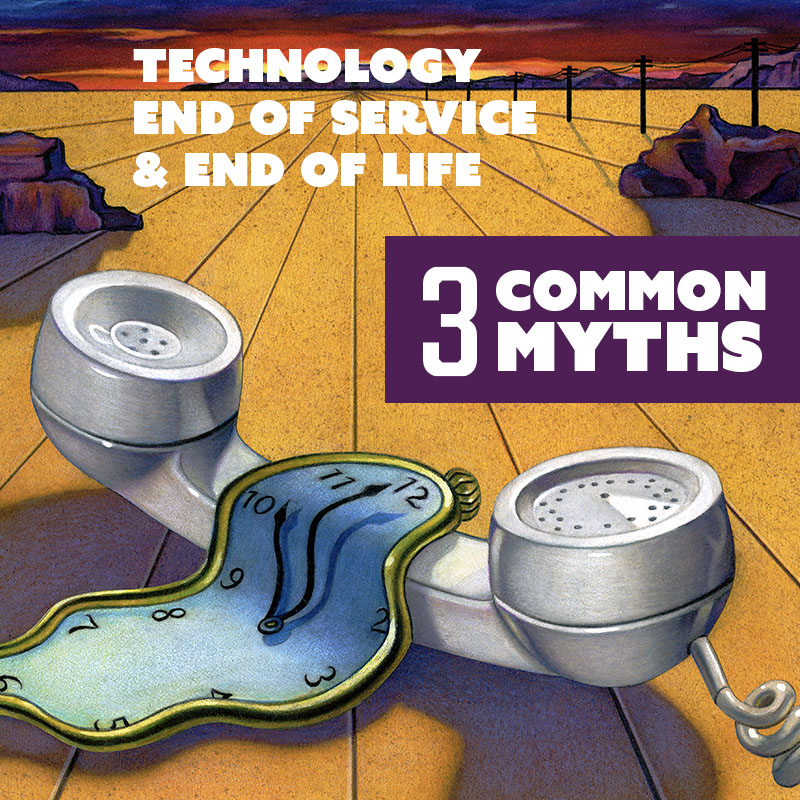
Your software is only as good as its last patch. Reaching End of Life (EoL) or End of Service (EoS) means critical patches and updates are no longer available, leaving you vulnerable to various problems.
Some make the mistake of not rushing to upgrade the software because it is still functional. However, outdated software can lead to security risks, data loss, compliance issues, and more.
In this blog, we will discuss the primary implications of running outdated software and explain why it’s crucial to take action when your software reaches EoL or EoS.
When a software or hardware product reaches its End of Life (EoL) or End of Service (EoS), it's no longer supported by the manufacturer. This can be a cause of concern for organizations like yours because unsupported technologies have no routine internal security measures or support from the manufacturer.
The good news is that there are steps you can take to mitigate the risks that come with EoL software/hardware and protect your business. Read on further to learn about them.
All flights, regardless of the airplane, encounter some form of turbulence. A wise person (my mother) once told me before my first flying experience that just because there is some shaking and bouncing on the flight, to not worry, because it is all part of the glory of flying. This of course came on the heels of overwhelming news coverage of a plane crash in Charlotte, North Carolina that was caused due to wind shear and turbulence. Needless to say, I was anything but calm until I got into the air and witnessed the majesty of the earth from 37,000 feet. Day two of ThreatLocker’s Zero Trust World conference had a very similar theme.
It'
s crucial to keep all software and hardware up to date to maintain optimal security. If you don’t, cybercriminals can easily infiltrate your network and the chances for downtime increase significantly. However, many businesses don't realize that expired software/hardware can actually be one of the most prominent security risks hindering their success.
Even organizations with solid cybersecurity programs will have findings from a security assessment. After all, cyber attacks and attackers continue to learn and evolve, always trying to be one step ahead of their prospects. Through our years of performing security assessments, here are the Top 5 areas that we have found to need remediation work post-assessment.
The year is 2021. We don’t have flying cars or robot maids, but nearly 5 billion souls worldwide are now connected to the Internet and to each other. This is a beautiful thing and a remarkable feat of human ingenuity. However, every rose has its thorn (to borrow from the great post-modern philosopher Bret Michaels) and to us who work in cybersecurity, 2021 was thornier than ever.
Here is Appalachia’s 2021 Cybersecurity Year in Review!
If you are an organization with digital assets to protect, you’ve most likely heard the term Penetration Testing, also known as Pen Testing. Penetration testing is the process used to find vulnerabilities and leverage them to hack an organization.
Humans are the smartest beings on earth. So why is it that they are the number one cause for breaches that cost millions of dollars? It’s because they are kind.
Because of the kindness of human beings, they are easily manipulated by bad actors to give up private information or even hold a door. This is the foundation of Social Engineering.
Not a single day goes by that we don’t either hear the word security or read the word security. See? You’ve already read it twice! The internet is full of so much noise that it sometimes can be hard to filter out information that pertains to you and your organization, as well as what is credible. Today I thought I’d take a moment to give you some great sources for security news. These are sources that are very accurate and trustworthy.
Ransomware – The What, Where, and Why
Everyone has heard stories by now of an organization getting hit by ransomware. From individuals to small and enterprise-level organizations, it can pop up anywhere and cause havoc. What is it? Where does it come from? Why isn’t it going away? Today we’re going to break it down.
Recently, we explored the Open Web Application Security Project (OWASP) Top 10 (Allergic to Bees? Don’t Get Stung by the OWASP Top 10) by looking at what it is and why it matters. Then we took a closer look at one area of the Top 10 – Security Misconfiguration. Next in line for a deeper dive is Security Logging and Monitoring Failures. This particular category is in place to help detect, escalate, and respond to active breaches.
We are all aware of the term “use by date.” It is regularly used when talking about food and medications and refers to the date after which the product is no longer safe to consume. However, did you know that your software and hardware can expire too?
Time flies when you’re having fun, which is an accurate depiction of the last three days at the Zero Trust World conference in Orlando, Florida. There is quite a buzz going through the air about ThreatLocker after they announced their new endeavor, ThreatLocker Ops, which is their first foray into cyber attack detection. The ThreatLocker booth is hard at work answering questions and fielding requests to beta test the product. Not to mention their cool cash machine that new clients get to spend 30 seconds in to grab as much money as possible! It has been fun to watch.