
Appalachia Technologies Blog
The Ghosts in Your Network: A CISO’s Guide to Managing Unpatchable Legacy Systems

Your biggest security risk isn't a zero-day exploit announced this morning. It’s that 20-year-old server running your door locks that everyone is too afraid to touch.
Let’s talk about the ghosts in your network.
We all have them. The Windows XP machine controlling a critical manufacturing line. The ancient server managing CCTV feeds. The forgotten box that holds the keys to your building's physical access. We keep them because they’re “too expensive to replace” or, more ominously, “too critical to turn off.”
But by treating them as untouchable, we're not avoiding risk; we are blindly accepting it.
What Makes a Digital Ghost
These systems are digital ghosts: they’re not quite dead, not quite alive, and they haunt our networks with vulnerabilities that can never be fixed.
- They are unpatchable. Patches either don't exist or will break their fragile functionality.
- Modern security tools are blind to them. Your shiny new EDR can't run on a legacy OS, and your SIEM dismisses their cryptic logs as noise.
- They are the perfect pivot point. For an attacker, compromising a legacy system is like finding an unlocked side door to a fortress.
Ignoring them is not a strategy - it's a gamble you will eventually lose. The solution isn’t always a multi-million dollar "rip and replace" project. The real solution is a robust, multi-layered strategy of containment and active risk management.
Here is the 5-step framework to go from haunted to hardened.
1. Isolate with Aggressive Containment (Build a Digital Cage)
The first rule of dealing with a ghost is you can't let it wander. Put it in a cage.
- Micro-segmentation: Don't just put the system on a separate VLAN. Implement strict firewall rules that enforce the Principle of Least Privilege. The legacy system should only be allowed to communicate with the exact IPs and ports it needs to function. Deny all other traffic by default.
- Virtualize It (P2V): If the ghost lives on aging physical hardware, a powerful interim step is to perform a Physical-to-Virtual (P2V) migration. This gets it off failing hardware, makes backups and recovery trivial, and simplifies applying network-level controls within the hypervisor.
2. Establish an Enhanced Watchtower (Monitor the Environment)
If you can't see what's happening on the system, you must scrutinize everything happening around it.
- Log All Network Flows: Feed network traffic logs from the isolated segment directly into your SIEM. Is the CCTV server suddenly trying to reach the internet? Is the factory controller trying to scan the HR department? These are high-fidelity alerts that your SIEM can understand.
- Monitor DNS and Authentication: A compromised system will try to phone home (DNS queries) or move laterally (authentication attempts). Monitoring for unusual DNS requests or a spike in login attempts originating from the legacy system are two of the most effective ways to detect a breach in progress.
3. Conduct a Fire Drill (Operational Readiness & Threat Modeling)
Don't wait for an attack to test your defenses. Actively prepare for the inevitable.
- Run a Dedicated Tabletop Exercise (TTX): Run a specific TTX for your key stakeholders with a scenario like: "Our building access system has been compromised. The attacker is locking staff out and letting themselves in. What is our playbook?" This makes the abstract risk terrifyingly real for leadership and justifies further investment.
- Threat Model the System: Brainstorm how an attacker would abuse this system. Would they steal data? Cause a physical disruption? Use it for persistence? Documenting these threat models helps you prioritize your defensive controls.
4. Bulletproof Your Recovery Plan (The "In Case of Fire" Box)
This system will fail. It's not a matter of if, but when—either from a breach or simple old age.
- Create and Test Cold Backups: A full, offline backup (a VM snapshot or disk image) is your lifeline. More importantly, you must regularly test a full restore. An untested backup is not a plan; it's a hope.
- Document Everything: Create a recovery binder with license keys, configuration files, vendor contacts, and step-by-step restore procedures. Assume the person doing the recovery has never seen the system before, because in a real crisis, they might not have.
5. Start the Escape Plan Now (Proactive Replacement Planning)
"Waiting for the budget" is a passive stance. A leader prepares for the opportunity.
- Don't Wait for the Budget Cycle: Do the research now. Identify 2-3 modern replacement options that would solve the business need.
- Get the Numbers: Engage with vendors to get preliminary quotes for hardware, software, and migration services.
- Have the Business Case Ready: Prepare a one-page document summarizing the risk, the operational impact of a failure, and the cost of the proposed solution.
When a near-miss incident occurs or when end-of-year funds suddenly become available, you won't be starting from scratch. You’ll be the one with a ready-made, well-researched solution.
Stop letting ghosts haunt your network. Acknowledge them, contain them, and have a plan to finally help them move on.
TLDR
Key Takeaways: Securing Legacy Systems
Unpatchable legacy systems pose a significant security risk. Instead of ignoring them, CISOs should adopt a 5-step risk management framework:
- Isolate: Use micro-segmentation to contain the system.
- Monitor: Log all network traffic to and from the system to detect anomalies.
- Prepare: Run tabletop exercises to test your response to a compromise.
- Recover: Maintain and test offline backups for swift restoration.
- Replace: Proactively research and budget for modern replacements.
FAQ: Managing Legacy System Security
Q: What is an unpatchable legacy system?
A: An unpatchable legacy system is an outdated piece of hardware or software that is still critical for business operations but can no longer receive security updates from its manufacturer. This makes it permanently vulnerable to known exploits.
Q: What is the biggest risk of legacy systems?
A: The biggest risk is that an attacker can use a known, unfixable vulnerability to compromise the system. They can then use it as a pivot point to move laterally across the network and attack more valuable assets.
Q: What is the first step to securing a legacy system?
A: The first and most critical step is isolation. By using network controls like micro-segmentation and strict firewall rules, you can create a "digital cage" that prevents the system from communicating with anything beyond its essential functions, limiting the blast radius of a potential compromise.
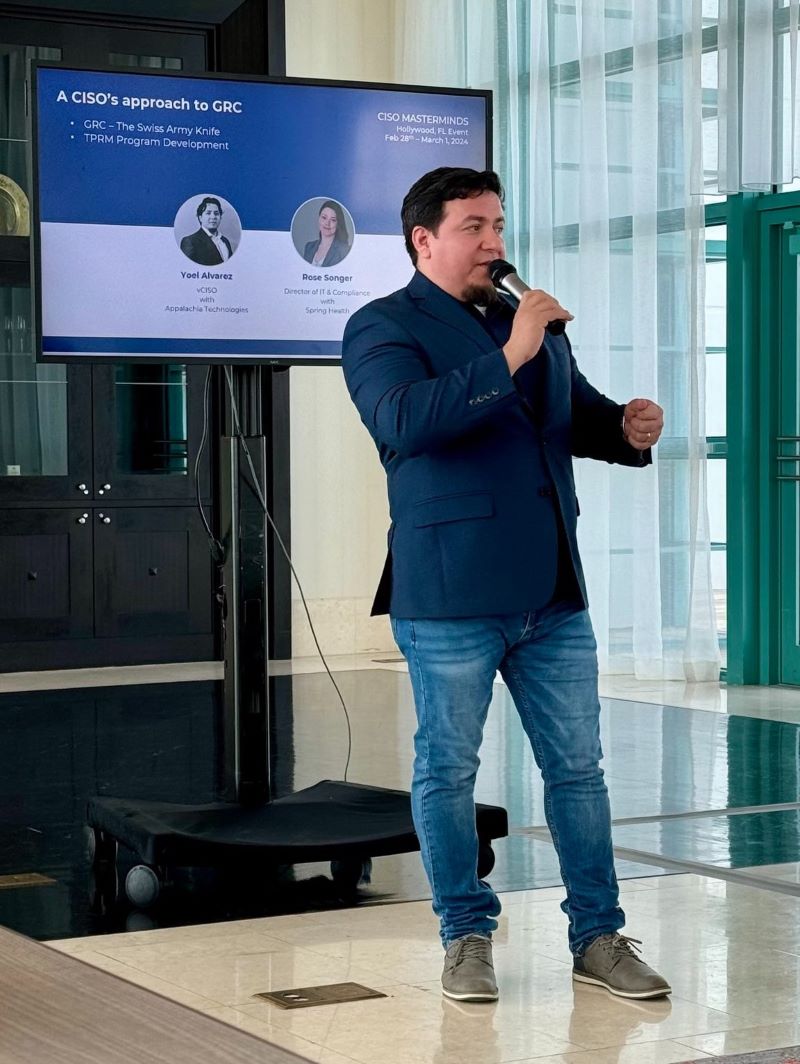 Over the course of his career, Yoel Alvarez has worked in various areas in Cybersecurity and Compliance for large, medium, and small companies, leveraging frameworks including NIST, ISO, HIPPA, SOX, SOC, GDPR, and PCI DSS.
Yoel's expertise lies in his ability to effectively translate complex cybersecurity concepts into practical strategies that are aligned with the goals of the business. He is recognized for his exceptional ability to build collaborative relationships with stakeholders, foster a security-conscious culture within organizations, and provide cybersecurity awareness to stakeholders at all levels. Yoel's professionalism, extensive experience, and commitment to excellence make him a trusted advisor in the cybersecurity space.